#include <transcendental_A.h>

Public Member Functions | |
| transcendental_sum_type_A (const GiNaC::ex &nn, const GiNaC::ex &i, const GiNaC::ex &l, const GiNaC::ex &v, const GiNaC::ex &ss, const GiNaC::ex &eps, int o, int f) | |
| void | archive (GiNaC::archive_node &node) const override |
| void | read_archive (const GiNaC::archive_node &node, GiNaC::lst &sym_lst) override |
| unsigned | return_type (void) const override |
| void | print (const GiNaC::print_context &c, unsigned level=0) const override |
| unsigned | precedence (void) const override |
| GiNaC::ex | eval () const override |
| GiNaC::ex | subs (const GiNaC::exmap &m, unsigned options=0) const override |
| virtual GiNaC::ex | eval_explicit () const |
| virtual unsigned | get_key (void) const |
| virtual GiNaC::ex | hash_data (void) const |
| virtual GiNaC::ex | subst_data (void) const |
| GiNaC::ex | set_expansion (void) const |
| GiNaC::ex | distribute_over_subsum (void) const |
| GiNaC::ex | distribute_over_letter (void) const |
| GiNaC::ex | shift_plus_one (void) const |
| GiNaC::ex | shift_minus_one (void) const |
Protected Member Functions | |
| GiNaC::ex | eval_ncmul (const GiNaC::exvector &v) const override |
| GiNaC::ex | derivative (const GiNaC::symbol &s) const override |
| unsigned | calchash (void) const override |
Protected Attributes | |
| GiNaC::ex | n |
| GiNaC::ex | index |
| GiNaC::ex | letter |
| GiNaC::ex | lst_of_gammas |
| GiNaC::ex | subsum |
| GiNaC::ex | expansion_parameter |
| int | order |
| int | flag_expand_status |
Detailed Description
The class transcendental_sum_type_A is a sum over a basic_letter and a product of ratio_of_tgamma . Additionally it may contain subsums of type Zsum. The definition is
![\[
\frac{\Gamma(1+d_1\varepsilon)}{\Gamma(1+b_1\varepsilon)}
\frac{\Gamma(1+d_2\varepsilon)}{\Gamma(1+b_2\varepsilon)} ...
\frac{\Gamma(1+d_k\varepsilon)}{\Gamma(1+b_k\varepsilon)}
\]](form_225_dark.png)
![\[
\sum\limits_{i=1}^n \frac{x^i}{(i+c)^m}
\frac{\Gamma(i+a_1+b_1\varepsilon)}{\Gamma(i+c_1+d_1\varepsilon)}
\frac{\Gamma(i+a_2+b_2\varepsilon)}{\Gamma(i+c_2+d_2\varepsilon)} ...
\frac{\Gamma(i+a_k+b_k\varepsilon)}{\Gamma(i+c_k+d_k\varepsilon)}
Z(i+o-1,m_1,...,m_l,x_1,...,x_l)
\]](form_226_dark.png)
Here, 


Member Function Documentation
◆ distribute_over_letter()
| ex distribute_over_letter | ( | void | ) | const |
letter is allowed to contain a sum of products (e.g. an expression in expanded form). Each term can contain scalars and basic_letters.
This routine converts the transcendental_sum_type_A to a canonical form, so that afterwards letter only contains a basic_letter.
◆ distribute_over_subsum()
| ex distribute_over_subsum | ( | void | ) | const |
subsum is allowed to contain a sum of products (e.g. an expression in expanded form). Each term can contain scalars, basic_letters, list_of_tgammas, Zsums or Ssums.
This routine converts the transcendental_sum_type_A to a canonical form, so that afterwards subsum only contains a Zsum.
The algorithm is based on the following steps:
- If an object is of type basic_letter and the difference of its index with the index member is an integer, it is combined with the letter member. Otherwise it is taken out of the sum.
- If an object is of type list_of_tgamma and the difference of its index with the index member is an integer, it is combined with the lst_of_gammas member. Otherwise it is taken out of the sum.
- If an object is of type Zsum and the difference of its index with the index member is an integer, it is stays inside the subsum. Otherwise it is taken out of the sum.
- If an object is of type Ssum and the difference of its index with the index member is an integer, it is converted to an Zsum and stays inside the subsum. Otherwise it is taken out of the sum.
◆ eval()
|
override |
Simplifications, which are always performed are:
- If subsum is equal to 1, the subsum is replaced with Z(i-1).
- If subsum is not of type Zsum, the routine distribute_over_subsum is called.
- If the difference of the upper summation index of the Zsum with the index member is not an integer, the Zsum is taken out of the sum. The subsum is replaced with Z(i-1).
- If letter is not of type basic_letter, the routine distribute_over_letter is called.
- If the difference of the index of the basic_letter with the index member is not zero, the index in basic_letter is adjusted.
- If the difference of the index of lst_of_gammas with the index member is not zero, the index in lst_of_gammas is adjusted.
If flag_expand_status == expand_status::expansion_required, the evaluation routine performs a set of consistency checks:
- It adjusts the upper summation limit in subsum to index-1. If


- It checks, that letter does not give rise to poles (e.g. that the offset

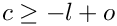
- It checks, that the


If one of the tests fails, the object is put into a zombie state.
If flag_expand_status == expand_status::check_for_poles, it assures that the Gamma functions in the numerator do not give rise to poles (by taking out the critical part and shifting the summation index). The function shift_plus_one() is used.
If flag_expand_status == expand_status::expand_gamma_functions, the Gamma functions are expanded into Euler Zagier sums. This is done by setting the expansion_required flag in the ratio_of_tgamma class.
If flag_expand_status == expand_status::adjust_summation_index, we deal with sums of the form
![\[
\sum\limits_{i=1}^n \frac{x^i}{(i+c)^m} Z(i-1,...)
\]](form_209_dark.png)
Here eval adjusts the offset. In the case 

If flag_expand_status == expand_status::evaluated, the sum is in the form
![\[
\sum\limits_{i=1}^n \frac{x^i}{i^m} Z(i-1,...)
\]](form_212_dark.png)
and is converted to a Zsum.
◆ eval_explicit()
|
virtual |
Explicit evaluation
◆ eval_ncmul()
|
overrideprotected |
No automatic simplifications
◆ get_key()
|
virtual |
The hash key is calculated from the hash_data.
◆ hash_data()
|
virtual |
The summation index is a redundant variable and does not influence the hash_data.
◆ set_expansion()
| ex set_expansion | ( | void | ) | const |
Sets the flag flag_expand_status to expand_status::expansion_required. The object is then automatically expanded up to the order specified in the member variable order.
◆ shift_minus_one()
| ex shift_minus_one | ( | void | ) | const |
This routine assumes sums of the form
and performs the substitution index -> index + 1.
If 
![\[
\sum\limits_{i=1}^n \frac{x^i}{(i+c)^m} Z(i-1,...)
=
\sum\limits_{j=0}^{-m}
\left( \begin{array}{c} -m \\ j \\ \end{array} \right)
c^{-m-j}
\sum\limits_{i=1}^n \frac{x^i}{i^{-j}} Z(i-1,...)
\]](form_218_dark.png)
If the depth of the subsum is zero, we have
![\[
\sum\limits_{i=1}^n \frac{x^i}{(i+c)^m}
=
\frac{1}{x} \sum\limits_{i=1}^n \frac{x^i}{(i+c-1)^m}
\mbox{} - \frac{1}{c^m} Z(n-1) + \frac{x^n}{(n+c)^m} Z(n-1)
\]](form_219_dark.png)
The last term contributes only if 
If the depth of the subsum is not equal to zero and 
![\[
\sum\limits_{i=1}^n \frac{x^i}{(i+c)^m} Z(i-1,...)
=
\frac{1}{x} \sum\limits_{i=1}^n \frac{x^i}{(i+c-1)^m} Z(i-1,...)
\mbox{} - \sum\limits_{i=1}^{n-1} \frac{x^i}{(i+c)^m} \frac{x_1^i}{i^{m_1}} Z(i-1,m_2,...)
\mbox{} + \frac{x^n}{(n+c)^m} Z(n-1,...)
\]](form_221_dark.png)
If 
![\[
\sum\limits_{i=1}^n \frac{x^i}{(i+c)^m} Z(i-1,...)
=
\frac{1}{x} \sum\limits_{i=1}^n \frac{x^i}{(i+c-1)^m} Z(i-1,...)
\mbox{} - \sum\limits_{i=1}^{n} \frac{x^i}{(i+c)^m} \frac{x_1^i}{i^{m_1}} Z(i-1,m_2,...)
\]](form_223_dark.png)
This routine is called from eval/adjust_summation_index only for 
◆ shift_plus_one()
| ex shift_plus_one | ( | void | ) | const |
This routine performs the substitution index -> index - 1. The formula used is
![\[
\sum_{i=1}^n \frac{x^i}{(i+c)^m} \frac{\Gamma(i+a_1+b_1 \varepsilon)}{\Gamma(i+c_1+d_1 \varepsilon)} ...
Z(i+o-1;...)
\]](form_213_dark.png)
![\[
=
x \sum_{i=1}^n \frac{x^i}{(i+c+1)^m} \frac{\Gamma(i+a_1+1+b_1 \varepsilon)}{\Gamma(i+c_1+1+d_1 \varepsilon)} ...
Z(i+o;...)
\]](form_214_dark.png)
![\[
+ \frac{x}{(c+1)^m} \frac{\Gamma(a_1+1+b_1 \varepsilon)}{\Gamma(c_1+1+d_1 \varepsilon)} ...
Z(o;...) Z(n-1)
\]](form_215_dark.png)
![\[
\mbox{} - x \frac{x^n}{(n+c+1)^m} \frac{\Gamma(n+a_1+1+b_1 \varepsilon)}{\Gamma(n+c_1+1+d_1 \varepsilon)} ...
Z(n+o;...) Z(n-1)
\]](form_216_dark.png)
This routine is called from eval/expansion_required, eval/check_for_poles and eval/adjust_summation_index.
◆ subst_data()
|
virtual |
No substitutions necessary.
The documentation for this class was generated from the following files:
Generated by
 1.12.0